Yacht Fathom - Setting off from England in May 2016 on a single-handed voyage somewhere a bit warmer

Panama to the Marquesas – Part 1

It would have been nice to stay longer in the beautiful Perlas islands but as Fathom was full to the brim with fresh food and the forecast showed some good north east winds for a few days I was keen to set off on the 3971 nautical mile voyage to the Marquesas as soon as possible. After a trip up the mast for a last check Fathom was on the way out of the anchorage early afternoon on the 17th March when I spotted two people in a small dinghy waving frantically to me in the distance. It turned out they were a young American couple who had just been spear fishing on the reef and had guessed I was off to the South Pacific, probably by Fathom’s incredibly low waterline. They had wanted me to take a fresh fish they had just caught and passed up a good sized red snapper all gutted and ready for the pan. A nice send off and another example of kindness from fellow cruisers. They would be the last people I would see in five and a half weeks.

Perlas to the Galapagos region – Day 1 to Day 9

It turns out that the most consistent wind and fasted progress of the whole voyage occurred during the first couple of days. Sustained 15 to 20 knots of breeze, the remainders of the Caribbean tradewinds, and a tail current enabled Fathom to roar along at 6 knots at times. Due to the high amounts of shipping in the bay of Panama I slept in short chunks at night and used the AIS and radar alarms to keep a look out. By the third day the wind was under 6 knots and the cruising shute was deployed. This is the big asymmetric spinnaker which I use in winds under about 12 knots but never fly at night in case there is a squall or it gets wrapped. On the fourth day I spotted another yacht on the horizon but couldn’t raise them on the VHF for a chat.

chasing rainbows

The wind was still under 10 knots during the 5th day but a current of nearly 2 knots enabled 24 hour runs of close to 100 nautical miles. It was on day 6, when becalmed, that I made the spontaneous decision to swap the sails over. The yankee headsail was swapped for a new and unused downwind headsail and the mainsail swapped for a well used but serviceable second hand one I had purchased for £150 as a spare before leaving the Island. The idea being I could save the primary sails from UV light damage and from banging about in the calms to come. It took nearly all day to remove the mainsail, battens, reefing lines and get it stowed (not easy to get it neatly packed into the bag alone!) and the replacement bent on and single line reefing setup adjusted accordingly.

The wind remained very light during the 6th and 7th days but I was reluctant to use the engine due to the need to save the diesel for calms later in the voyage when there would not be favourable current. The cruising shute was deployed in the daylight hours and at night the mainsail and poled out headsail. One notable change was the increase in cabin temperature as we approached the equator. The cabin thermometer regularly showing temperature of up to 42 degrees! I was constantly drenched in sweat, day and night, and without any real wind it was very uncomfortable onboard. Everything inside was sticky and it was generally not too pleasant.

At last a better breeze on the 8th day with 12 knots from the north east and I was in great spirits. During the afternoon Fathom crossed the equator for the first time. Second time for me having crossed 10 years ago when sailing from Hawaii to French Polynesia on yacht Babelfish. I toasted Neptune by tossing him some Balboa lager and enjoyed the remainder of the can myself. I never drink at sea so this was a rare treat. It felt great to be in the southern hemisphere and I remember feeling that I really was a long way from home. As part of the celebration of being in the south I decided to bake a cake later in the afternoon by cheating and using a pre mix pack. However it turned out like a chewy rubber mess which was most disappointing and it was inedible.

What a difference a day makes. On day 9 there was less than a knot of wind and Fathom was crawling along at 2 knots with the current. A real game of patience in these conditions and with over 3,000 miles still to go to the destination I couldn’t help thinking, however unrealistic, that we might be at sea for months and soon i’ll be so low on fresh water i’ll be performing rain dances on deck. I had never properly got to grips with the fuel consumption of the engine since it had been installed in October so spent a bit of time working out how many hours I could motor on the fuel capacity I was carrying and various RPM levels and reckoned on about 450 miles max. Resorted to motoring for several hours during the afternoon to make some meaningful progress and myself feel better. The south east tradewinds still at least 500 miles away to the south.

During the night I was very close to the Galapagos islands and as the sun rose the next morning I could just make out the outline of Isla Cristobal on the horizon. It was a shame to give these islands a miss but the cost for visiting yachts are in the thousands of dollars and the regulations stipulate the underwater hull must be entirely clean and the cabin fumigated. Fathom was completely becalmed during the next night so I dropped all the sails and went to bed leaving Fathom to drift south with the current at 1.5 knots. I later received a few messages from people asking if everything was ok as they had seen low speeds on the tracker map and were worried something bad had happened!

Over the next days I noticed a significant increase in bird and animal activity. I was visited by blue footed boobies who flew constantly in loops around the boat, especially at night when they loudly squawked and looked like they were trying to land on the mast but never did. Lots of dolphins by day. I awoke one night to the sound of flapping sails and the boat wildly offcourse. After going on deck the cause became apparent. A bird had decided to perch on top of the wood paddle of the self steering gear for a rest. Why on earth it chose to sit there when it had the mast and the rest of the boat is beyond me.

Galapagos region and south to the trades. Day 10 to Day 17

At this time the weather forecast and free routeing advice emailed weekly from a forecaster in New Zealand was not overly encouraging. A convergence zone had formed south of the equator between the Marquesas and the Galapagos islands with big squalls, thunder storms and calms. Furthermore there was now a river of east going current, the equatorial counter current, running between 2 degrees and 6 degrees south, west of the Galapagos. The recommendation for yachts heading to the Marqueasas was to avoid the direct route, cross the foul current as quickly as possible then head right down to 12 degrees south to find the tradewinds before turning directly to the Marqueasas. A much longer distance.

The journal reminds me that day 10 was quite successful in the galley. An excellent cake baked, fresh loaf of bread and a sausage, carrot and sweet potato stew in the thermal cooker. Good sailing in the day but little wind during the night. A small milestone on day 11 was that Fathom passed 91deg 30′.27W longitude and therefore was a quarter of the way round the world from Yarmouth!

Fathom was well and truly in the doldrums during days 12 and 13. Baking hot with not a breath of wind and a mirror like sea. Motored through the night which was miserable to try and get though the foul current as soon as possible. A couple of notable things on day 14 – the equatorial counter current was passed at last, signified by the speed over the ground increasing by a knot and I mastered the four hole draw bend on the harmonica!

I guess I wasn’t completely alone as technology in the modern age allows contact with others. A highlight each day was checking emails and reading messages from friends and family. Thanks to everyone who messaged me it was much appreciated. It was good also to exchange SMS messages via the sat phone with my friends Victor and Julie who left the Perlas islands one week after Fathom. We would compare weather conditions and fishing success rates and generally check everything was ok.

The night of 31st March I was woken up in the wee small hours to a squall so went on deck in the howling wind and heavy rain to put some reefs in the mainsail and roll in some headsail. A long standing problem, which I thought I had solved in the Cape Verdes, began to occur again around this time. The Aries self steering gear paddle began to flip up time and time again especially in bigger waves and wind. When this happens the boat veers off course and invariably this occurs in the middle of the night during a squall or when i’m fast asleep. The boat needs to be stopped and I hang over the stern with the boat hook to reseat the blade. It was not something I could really fix at sea because the cause was the swelling of two parts of the hinge so I made the best of it.
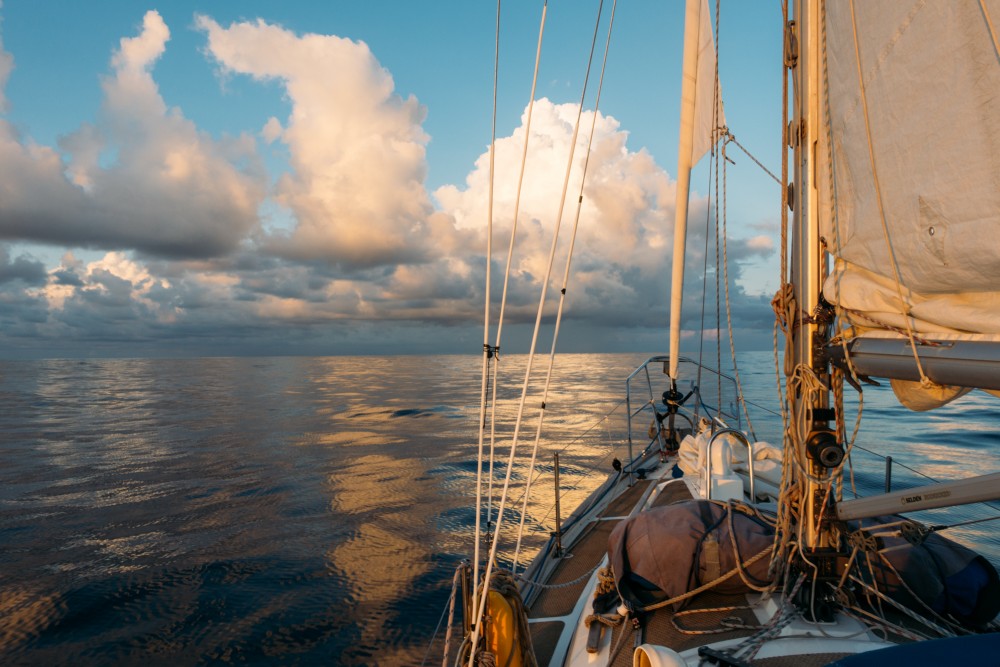
During the following days the sea became rough and very confused with swell from several directions. The motion of the boat was most uncomfortable and doing any task in the cabin difficult. To make it worse squalls regularly appeared from astern with wind going from 7 knots to 27 knots in an instant. Sleep was hard to come by at night so I was tired and lethargic during and not in great spirits. The Aries paddle flipped up numerous times which didn’t improve my mood. At least progress was reasonable with daily runs ranging from 110 to 121 nautical miles. Most of the days were spent catching up on sleep or reading.

Posted on 28 Apr in: Misc

To the South Pacific!

I think Fathom and I are as ready as we’ll ever be for the long passage to the Marquesas Islands. Yesterday we departed the anchorage at La Playita and spent several hours motoring in no wind before having a nice sail over the last few miles to the island of Isla Contadora in the Perlas Islands. This morning I went up the mast to check everything over before it got too hot, replaced the self steering lines and went over the side to give the waterline and propeller a scrub. Unfortunately the bottom isn’t as clean as I would like, quite a few barnacles have got a grip and some will have to make the passage with us. The boat is full to the brim with stores there is not one bit of space in any locker or cupboard. Highlight of my fresh food provisioning is probably the box of green bananas I purchased at the large local market for 10 dollars, a bargain. Only trouble is I have 100 of them and they are bound to ripen all at once! In addition to the 220 litres of water and 110 litres of diesel in the main tanks, there is an extra 100 litres of diesel in jerry cans and just over 100 litres of bottled water. Waterline, what waterline?

I have heard many good things about the Perlas Islands but as I am already tucking into the fresh food and water want to get cracking asap. Intend to set off in the next hour or two. It is quite hard to prepare mentally for such a long trip alone, nearly 4,000 nautical miles, more than double the Atlantic crossing. The intertropical convergence zone (doldrums) and large areas of calms are sure to be frustrating and may drive me mad but I know conditions will improve once I am far enough south to reach the S.E trade winds.  It looks like two or three days of N.E breeze to get Fathom out of the Bay of Panama. There is an option to pull into the Galapagos Islands if very short on diesel or water but will avoid if I can. The cost and regulations for visiting yachts these days is sadly not making these islands a viable option for those of us on a budget.

A quick mention of my inreach tracker which sends tracking points to the map on my blog. Yesterday it malfunctioned and wouldn’t update the map but today it seems to be working again. Hopefully it will keep on working but who knows. Don’t be alarmed if it stops.

Bye for now.

Posted on 17 Mar in: Misc

Panama Canal

We had been instructed to depart the marina at Shelter Bay by 13.00 on the 8th March and proceed to the flats anchorage to await the advisor who would board at 15.00. Fathom felt very sluggish with the four line handlers onboard, Anne and Jim, Jose and Jaime and the heavy fenders and warps. As expected, there was a delay and the advisor, Francisco, didn’t board until 17.00. Fathom was one of three yachts transiting through Gatun locks during the afternoon, the other two being a 40 foot Dutch catamaran and an American 55 foot Beneteau called Zatara. The advisor explained that Zatara would be the middle boat with the cat rafted on her portside and Fathom on her starboard side. As Fathom was small Zatara would handle the bow and stern warps to the starboard lock wall and the catamaran the port side warps. An easy ride for us.

Fathom enters Miraflores lock

The three locks on the Atlantic side of the canal are collectively known as the Gatun locks. They raise a vessel a total of 26m in three separate chambers. Each chamber is 33.53m wide and 304.8m long. Before entering the first chamber the three yachts rafted alongside each other without issue and Zatara used her engine to move the raft into the lock behind a general cargo ship that had gone in first.  Once past the open lock gate monkey fists at the end of a thin line were thrown from the lock wall and attached to the warps onboard the yachts.  Everything was running smoothly until the three yacht raft was approaching the third chamber and we noticed the lock gates were shutting in front of us. Panic stations! All three yachts hard in reverse. Luckily we managed to stop in time but it could have been a disaster. All three advisors said that in their many years of working in the canal they had never seen the lock gates begin to close before all vessels had entered. The advisor does not stay onboard overnight but does require feeding. I had prepared a sausage and sweet potato stew in the thermal cooker that morning so it was all ready. After he had finished his plate he came back up to the cockpit and said “who is the cook?” I replied it was me and he looked mighty surprised before saying “that dinner was ten outta ten!!”.

Once clear of the third chamber we separated from the raft and proceeded into Gatun lake where we tied alongside Zatara for the night, who were alongside a buoy. The advisor was picked up and the rest of us settled down in the cockpit for dinner and some cold beers. It was rather cosy overnight with five sleeping in the cabin. I squeezed myself alongside the liferaft on the quarter berth and the others slept on the port and starboard bunks and two pipe cots. Not only was the cabin an oven there was a snorer onboard!

The next morning a new advisor, Freddy, boarded at 08.30, he should have arrived at 07.00. The three yachts set off across Gatun lake towards the locks at the other end, a journey of about 30 nautical miles or five and a half hours. The lake is completely man made and has an area of 166.64 square miles. Fathom was barely afloat with six people onboard, various bits of temporary luggage and being in fresh water the waterline was even lower. We still managed to make between 5 and 5.5 knots which is what I had stated to the authorities we could achieve. Despite this, the other yachts disappeared into the distance and we later learnt they had made an earlier lock and we would have to wait for a much later lock and go through alone in centre chamber configuration. This would mean that unlike the easy ride we had in the Gatun locks we would now be required to do all four warps ourselves.

After passing through the Galliard Cut, a passage carved through rock and shale, we reached Pedro Miguel Lock but had to wait a couple of hours for a slot so tied up alongside an unused lock wall to wait in the baking sun. Freddy explained we would go through with a tug and barge, rather appropriate I thought after spending many years working with these kind of ‘vessels’. In the meantime we watched, with a mix of surprise and amusement, a huge container ship moving into the lock. Despite over USD 5 billion worth of improvements to the canal it still took two blokes in a small rowing boat to attach the dock rope to the ship. Eventually we moved and proceeded into the lock. Four monkey fists were thrown down and each of the four lines attached. The line handlers on the lock wall then hauled in the ropes and make fast on bollards when we were in position. The warps were eased as the water level dropped 9m. No dramas and once through we were disconnected from the shore lines and motored along the artificial Miraflores lake to the Miraflores locks where we were again connected to the lock with our four lines as before. I had primed friends and family to watch the webcam at Miraflores and grab a screen shot for old times sake.

The last chamber is often the worst because there are various eddies and currents where the fresh and salt water meet. But it was fine for us and Fathom was lowered back to sea level without drama. It was a special and unique feeling when the last lock gate opened and, at last, Fathom was in the Pacific Ocean! Thanks to all four line handlers for your excellent work. It really feels like Fathom and I have come along way from Yarmouth. A whole new adventure awaits, more in the next post before setting sail once again.

Posted on 12 Mar in: Panama Canal

Shelter Bay & Canal Preperations

On arrival at Shelter Bay marina on the 24th February I was informed that there was a 5-day carnival celebration about to happen in Panama and most of the country would grind to a halt. The Panama Canal never stops but the official admeasurers, who visit yachts before a transit date is given, were short staffed and this caused several days delay. Thankfully the items ordered from the US were waiting for me including two new Genoa cars and a couple of cruising guides for the Pacific.

There is an active community of yachties at Shelter Bay, a mix between those only around for a few days before transiting and those who live onboard permanently. A different event is run every evening ranging from open mic night on Fridays to movie night on Thursdays, all good fun.  As the marina is quite isolated a free bus runs once or twice a day to a big shopping centre near Colon and I made use of this several times to start building up stores for the Pacific. It was good to catch up with some familiar faces including French couple Victor and Julie who I had last seen at the bar in Cape Verde the evening before we all set off across the Atlantic. A notable visitor to the marina while I was there was Dee Caffari who was waiting to transit the canal on a swanky multihull.


I had decided to appoint an agent for the canal transit, Erick Galvez, who came highly recommended from other cruisers. Erick made life very easy and was always quick to respond to any questions I had. His services included dealing directly with canal authority, providing the mandatory eight large fenders and four 125 foot lines, handling the money transfers (no need for me to take several trips to banks in Colon), booking the measurer, providing line handlers (for a fee), avoiding the requirement for an 800 USD deposit and providing the exit zarpe for Panama. Eventually on the 28th, Fathom was visited by the canal official, the boat measured and later that day we were given a transit date of 8th March. I had to tell a white lie that Fathom had a holding tank to avoid the need to have a portable toilet onboard.

A requirement for going through the canal on a yacht is that in addition to the skipper, four line handlers are needed. I had quite a bit of trouble finding four because many yachts were scheduled to go through around the same time and people had already been snapped up. I posted a notice in the marina office and one afternoon was visited by Anne and Jim who had been crewing on an Oyster as part of the Oyster World Rally. Couldn’t quite believe they were happy to downsize from a luxury 55 footer to little Fathom but they agreed to come along. I couldn’t find anyone else so had to stump up some more cash and pay for two professional line handlers provided by Erick. On the 2nd & 3rd March I joined yacht ‘Little Dove’ as linehandler for their canal transit to gain some experience which was very worthwhile.

For anyone interested in the costs of going through the canal it isn’t cheap! Here goes:-

Transit tolls $800.00 ( 50 ft and under)  or $1,300.00 ( over 50 ft and under 80 ft)
Transit inspection $54.00
Transit Security fee $130.00
Fenders & lines rental $75.00
Bank charges $60.00
Agent service Fee $350.00
Professional line handlers $100.00 each
Check out fee $35.00
TOTAL COST $1704.00

Info and photos on Fathom’s canal transit in the next post.

Posted on 12 Mar in: Panama Canal

San Blas Islands

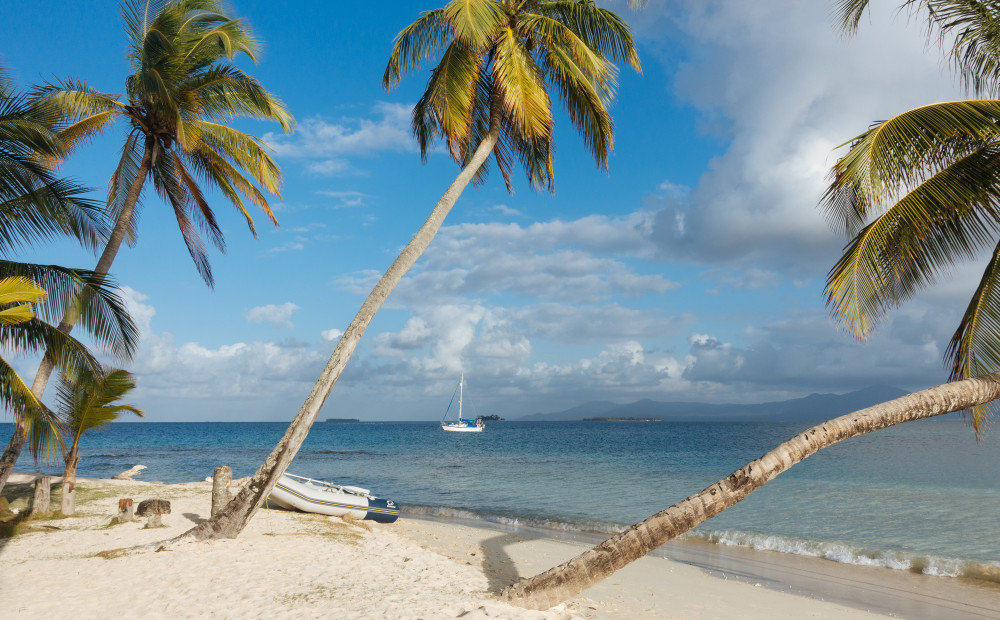
With no sign of any bugs or nasties on board, the outward clearance zarpe from Colombian customs safely stowed, and the diesel and water tanks topped up, Fathom departed Santa Marta at midday on the 14th bound for the San Blas islands, 280 nautical miles to the south west. These are a vast archipelago on Panama’s Caribbean coast comprising of over 340 islands and home to the indigenous Guna Indians. A brisk wind of 20 -25 knots allowed for fast sailing during the afternoon and evening with good progress towards the corner at Barranquilla. Unfortunately I was still feeling run down after the stomach bug I had picked up during the jungle trek and had a temperature and migraine so topped myself up with paracetamol during the night. 15 minute cat naps while feeling like that was hardly the most enjoyable experience. Not quite man flu but warrants a mention! After turning the corner at Barranquilla the wind gradually decreased and the seas flattened. Some pleasant sailing during the 15th when I started to feel much better but by the 16th the wind was under 5 knots and the engine was required. I planned to arrive at the San Blas in daylight so slowed intentionally. Land was spotted early on the 17th with the chosen landfall Coco Bandero Cays. The cruising guide describes these as ” a group of extremely scenic islands, situated behind a four mile long protective outer reef barrier. These uninhabited islands may be the most beautiful in all of the San Blas.” Sounded good to me.

DSC05491-2

A couple of days were spent anchored between the picture postcard islands of Olosicuidup and Guariadup. If you perform a google image search ‘The Panama Cruising Guide 5th edition, Eric Bauhaus’ and look at the front cover, Fathom was anchored where the 2nd boat from the right is. Doesn’t get much better. I spent a lot of time in the water and cleaned Fathom’s incredibly weedy waterline and propeller. The anitfouling is holding up pretty well but it is the soft eroding type which means I cannot scrub it otherwise it will all rub off. Hope it will last until the end of the year when Fathom will be hauled out. One afternoon was spent sewing a repair to the sprayhood, my herringbone stitch is coming on well. It is said that the definition of cruising is ‘performing maintenance in exotic locations’, an accurate description I am coming to realise.

From Coco Bandero Cays it was a nice sail west to East Lemon Cays and an anchorage off the island of Banedup. Navigating between the islands and reefs of the San Blas takes considerable care. Electronic charts of these islands are not accurate and the cruising guide contains the only accurate paper chartlets. It is therefore necessary to extract waypoints from the book and enter them into the chartplotter. Most importantly keeping a good lookout and eyeballing entrances to anchorages is vital. Thankfully the reefs can easily be seen with good sunlight and polarised sunglasses. I didn’t go ashore at Banedup but enjoyed the sunset from the cockpit. It would easy to spend a year exploring these islands, in fact many boats do, but for me time was pressing and unfortunately it was not possible to stay too long. The island of Porvenir, which lies on the west end of the chain, contains an immigration office for Panama so I headed there on the 20th. After anchoring and rowing ashore I got talking with a local Kuna Indian called Nesta. He is one of very few that speak English on the islands and kindly offered to act as translator when I met the immigration officer. After everything was completed Nesta offered to sail me in his dug out canoe to the tiny island he lives on about a mile away so I could buy a local SIM card. Why not I thought.

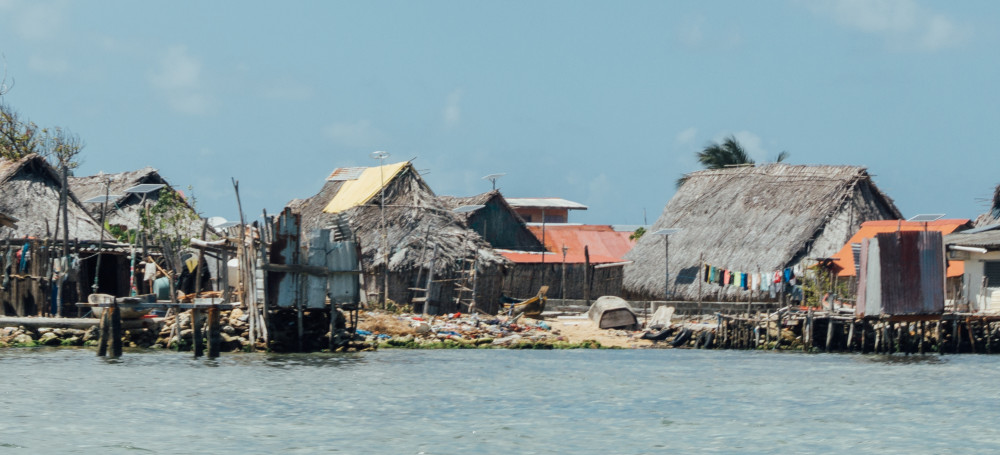
Half an hour later Nesta and his mate came alongside Fathom and picked me up. We set off downwind for their island sipping cold beers which I had offered to them for a return trip. The bamboo mast and boom, torn sail and leaking hull hardly seemed up to the job but after 15 minutes or so we arrived at the tiny island they share with 500 others. This island, like a few others, has lost the traditional Kuna Indian clothing but everyone still lives in small thatched houses like their ancestors have done for hundreds of years. It was fascinating to be invited into Nesta’s house, a one roomed building, and meet his family of 8. I couldn’t help notice the lack of privacy with potty in the middle of the floor but assume they all get used to it. We then strolled through the island, past the town hall, school and small jail to the one shop. Here, surprisingly, I was sold a local SIM card and I bought some bread (8 rolls) from a local lady for 1 USD. The return sail to the anchorage was upwind and I was surprised how well the canoe sailed to windward. I offered to bail halfway as we appeared to be sinking but they didn’t seem concerned. As the wind gusted up Nesta’s mate became human rigging in order to keep the bamboo mast upright. We arrived in one piece back at Fathom. I feel lucky to have had that unusual experience off the beaten track, it has definitely been a highlight of my trip so far. *video at bottom* I can now tick off ‘sailing in a Kuna Indian dug out canoe’ from the list of things to do before i’m 35.

Early afternoon I raised anchor and headed off for Gunboat island which the cruising guide describes as “uninhabited with high coconut trees and white sand beach”. Here I intended to spend the last night before leaving the San Blas and sailing to Puerto Lindo the next day. After negotiating the reef and anchoring in 6m of water off the east of the island I rowed ashore to find quite a few people on this ‘uninhabited island’. A man approached me and demanded 20 dollars for anchoring and told me it was now a private island. I wasn’t going to pay that so walked back along the beach and took some photos. Luckily the photos have come out quite well which justifies the visit. With only an hour of daylight left Fathom dashed to the next island (not private) and the anchor was set just before dark.

Early the next morning, Tuesday 21st, Fathom departed the San Blas and headed west 40 miles to Puerto Lindo which houses a customs official who can issue the mandatory Panama cruising permit. The wind held up for most of the trip and a few hours were spent under cruising shute. Puerto Lindo was reached an hour before sunset and a cold beer drunk in the cockpit while listening to the monkeys shrieking on the nearby island of Isla Linton. I write this now at anchor in Portobelo, 8 miles to the west of Puerto Lindo, a place where Sir Francis Drake is buried after dying of dysentery in 1596. I will have a walk round this afternoon before heading west to Shelter Bay tomorrow to await the official who will measure Fathom for the canal transit. Busy but exciting times.

Posted on 23 Feb in: San Blas Islands

Colombia – Ciudad Perdida

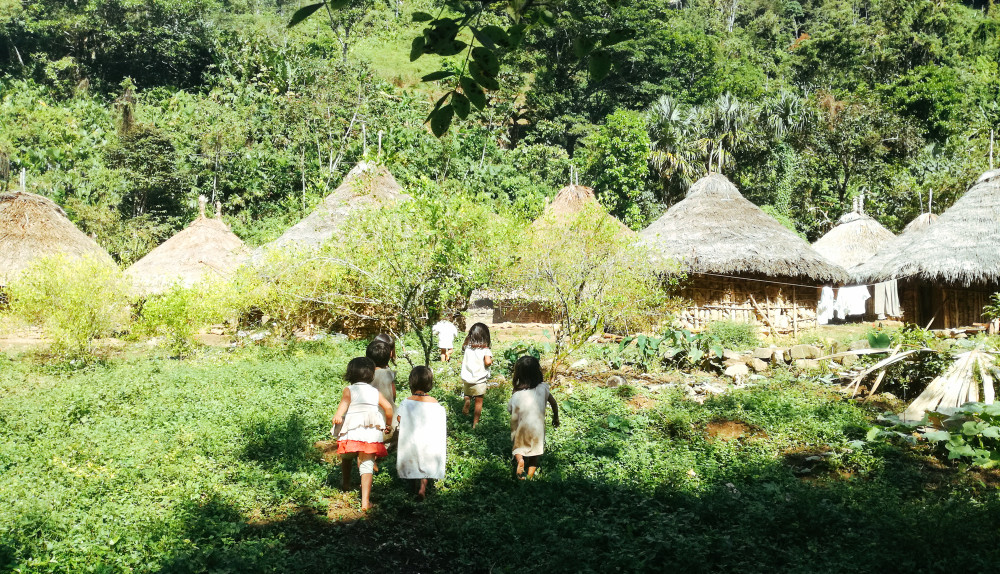
It is nearly time to leave Colombia and head west again. Fathom has been moored in the marina at Santa Marta which has allowed me to travel about and leave her in safety.  The highlight of my time here has definitely been the 4 day trek through the jungles, hills and river valleys of the Sierra Nevada mountains to Ciudad Perdida-(The Lost City). Ciudad Perdida is thought to have been built around 800 AD and consists of over 160 terraces carved into the mountainside. It was abandoned after the Spanish conquest when disease wiped out the indigenous inhabitants of the city but discovered again in 1972 when some stone steps were found leading up the mountain. Apparently the indigenous communities in the nearby mountains knew of its existence but had remained quiet. Unfortunately grave robbers ransanked the place over the next few years but it is now protected. In 2003 several visitors to the site were kidnapped by local rebels but the government now has the area back under control.

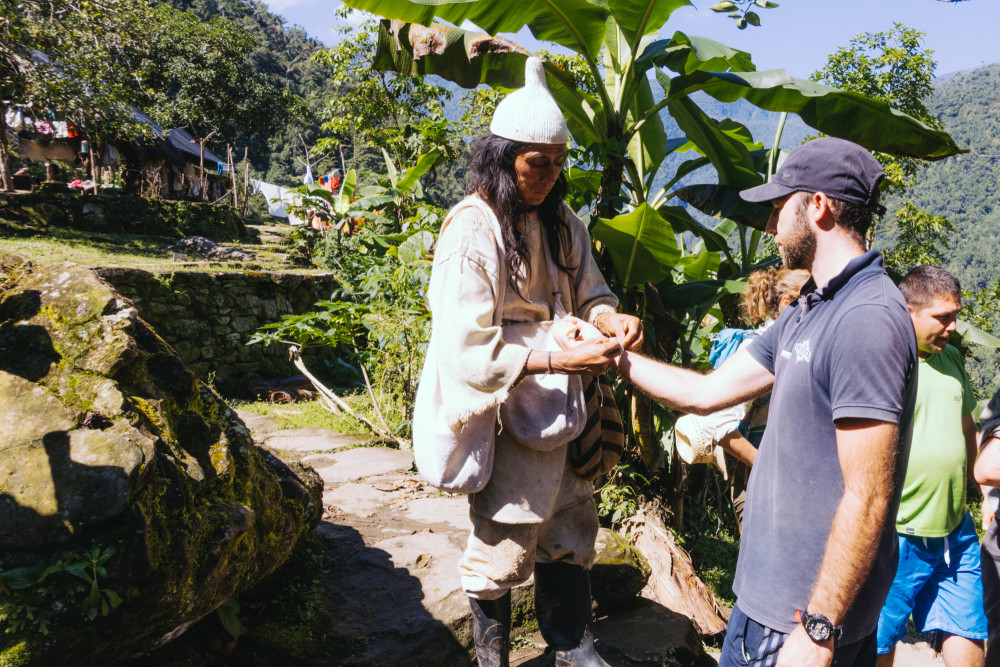
Our group with guide walked over 50km in four days which was a bit of a shock to the system after so long sitting on a boat. At night we stayed in camps and ate dinner prepared by our cook, usually consisting of rice, fried meat and one small token piece of vegetable. All the food, water and equipment at the camps was transported up the mountains by mule. Everything stays damp in the high humidity and the walking was hot and sweaty work. Thankfully there were several natural pools and rivers to jump into along the way to cool off.  It was a unique experience to witness the local indigenous Kogi community as we walked past one of their villages high in the mountains. At the Lost City we were lucky to meet the Shaman who governs the local area. Within the the Kogi community, all knowledge is passed to the younger generations by the Shaman through oral instructions and he runs their lives. He gave us wristbands to provide life long health and welbeing.
Unfortunately the wristband appears to have had the reverse effect and a few of us have been hit by sickness and the runs. We have not been able to work out what caused it but quite possibly it was the water the tour group provided. I was sick on the 3rd day and was barely able to eat any food for the next days. In fact even today, over a week since returning from the trek my stomach has still not returned to normal and I have only just got my appetite back. Same story for four or five of the others.

Last week I travelled to Cartagena by bus for a couple of days and met some shipping clients for my old company. Good to earn a few pounds and revert back to work mode temporarily. I have taken advantage of being in a marina to carry out some maintenance to the boat including engine service (oil change, new filters etc) and windlass overhaul. The marina is fine but a major disappointment here is the coal dust and sand which blows around constantly and covers not just the outside of the boat but gets inside the cabin forming a layer over everything.

As a few of you have probably guessed I am planning to transit the Panama Canal and head into the Pacific. I have appointed an agent and Fathom has been registered with the canal authorities. Spare parts are being delivered to Shelter Bay Marina in Panama at the end of the month (cross fingers) so I don’t have much time to visit the San Blas islands but hope to spend a few days there. The weather has been very lively as normal for this time of year. Wind constantly over 30 knots in the marina with peaks over 40 knots and big seas outside. It looks as though things are calming down this week for a few days so I am aiming to leave on Tuesday.

Posted on 12 Feb in: Colombia

Back to top